
Estadio BBVA (Guadalupe/Monterrey, Mexico) FIFA World Cup 26 Threat Assessment
Security threat assessment for matches hosted at Estadio BBVA (Guadalupe/Monterrey, Mexico) during the FIFA World Cup 26. Threat assessment based on two years of historical crime and unrest data within 1.5 miles of venue and 0.5 miles of nearby transit hub.
Overview
- Date Assessment Prepared: November 19, 2025
- Data Coverage Period: September 2023 – September 2025
- Stadium Location: Estadio BBVA
- Transit Hub Location: Exposición Metro Station
- Host City: Guadalupe/Monterrey, Mexico
Methodology Disclaimer This assessment integrates Base Operations quantitative threat data with qualitative intelligence from open sources collected via deep research AI agents. Confidence levels reflect source reliability: High (government/Base Operations verified data), Medium (multiple corroborating sources), Low (single source/extrapolated). AI agents can provide incorrect or misleading information. To ensure up to date accuracy of stadium threat assessment, analyze the latest data in Base Operations.
1. Executive Summary
- Stadium Area BaseScore: 44 (Medium Risk)
- Transit Hub BaseScore: 27 (Low Risk)
The operational environment surrounding Estadio BBVA for the FIFA World Cup 2026 presents a Medium severity threat landscape (BaseScore 44), primarily driven by high rates of regulatory offenses and fraud, alongside moderate violent crime levels. While the historical quantitative baseline suggests a manageable environment, the situational risk for high-profile attendees is assessed as elevated due to the presence of Transnational Organized Crime (TOC) groups and severe environmental stress factors.
Top Threat Categories (Confidence: High):
- Regulatory Offenses & Fraud: Both categories registered as Severity 4 (High) drivers within the Base Operations model, accounting for a combined 148 incidents in the stadium zone.
- Vehicle Interdiction: While vehicle theft statistics are low (44 incidents), qualitative intelligence confirms a high risk of armed carjacking and express kidnapping targeting high-value vehicles during traffic congestion.
- Environmental Instability: Acute water scarcity and extreme heat (projected >40°C) create a high probability of civil unrest, infrastructure strain, and health emergencies.
Strategic Takeaway: Security Directors must distinguish between the stadium's localized security (Medium risk) and the broader metropolitan transit risks (High situational risk). The primary physical threat vector is not within the hardened stadium perimeter, but during transit and egress operations where traffic gridlock creates vulnerabilities for TOC interdiction. The recent arrest of a Sinaloa Cartel facilitator in Monterrey confirms active cartel operations in the immediate region.
2. Event Snapshot
Event Details
- Venue: Estadio BBVA (FIFA designation: Estadio Monterrey).
- Location: Guadalupe, Nuevo León (5km northeast of central Monterrey).
- Tournament Window: June 11 – July 19, 2026.
- Peak Risk Dates: June 14 and June 20 (daytime matches with extreme heat exposure).
- Expected VIP Attendance: US/Canadian government officials, FIFA sponsor executives, international dignitaries.
Historical Significance Estadio BBVA is a LEED Silver certified facility that has hosted Liga MX and CONCACAF matches without major structural or security failures since opening in 2015. However, the venue operates within a region with a history of soccer-related violence, notably the nearby disturbances involving rival club ultras. The broader Mexican football security landscape was reshaped by the 2022 Querétaro riot, leading to stricter protocols that will be intensified for the World Cup.
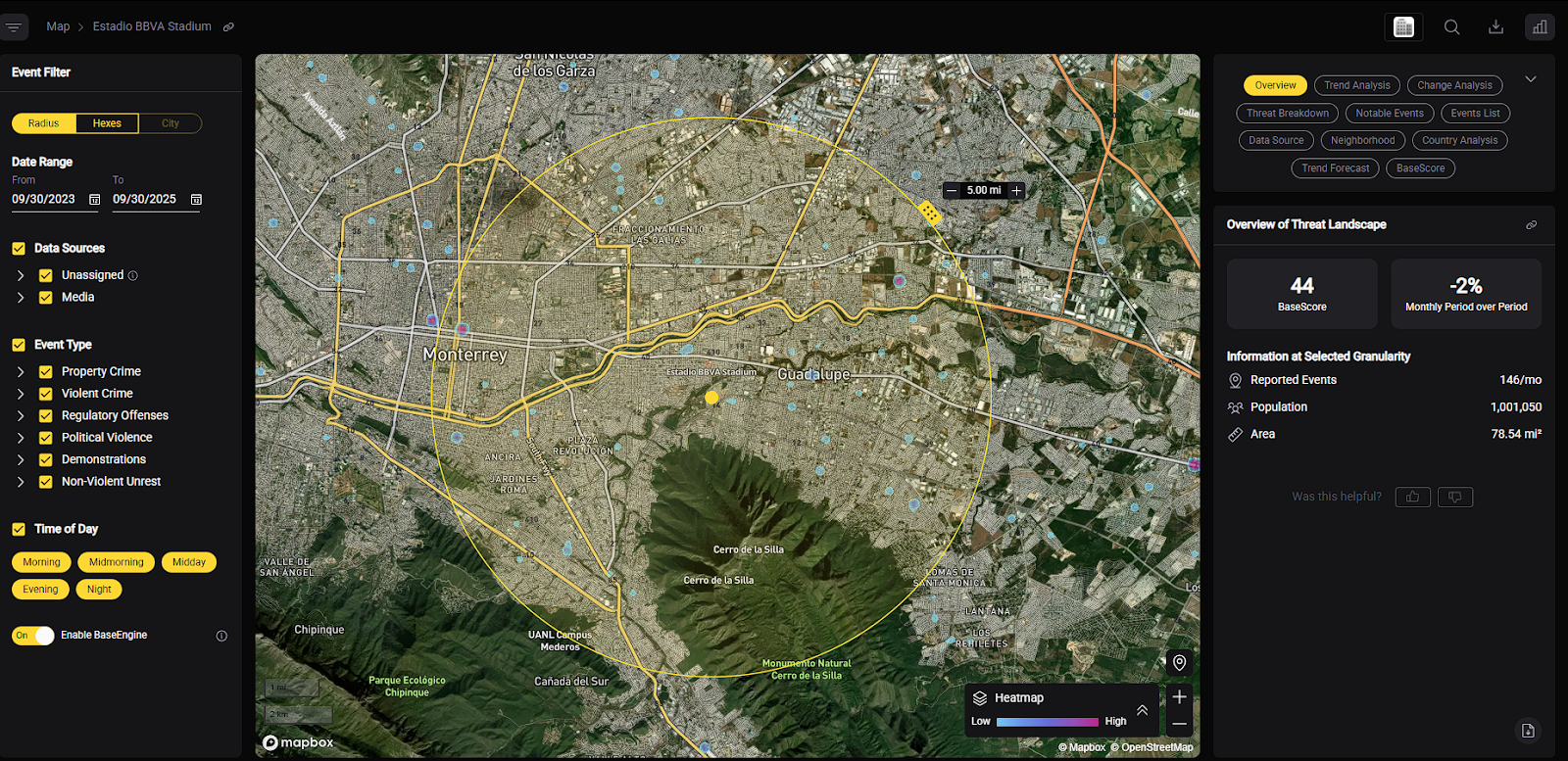
3. Area & Infrastructure Overview
Geographic Context The stadium is situated in the Parque La Pastora ecological zone, providing natural buffer zones that aid perimeter control but introduce complex approach vectors via park pathways. The Monterrey metropolitan area acts as a primary industrial hub but suffers from persistent security challenges related to TOC trafficking routes.
Base Operations BaseScore Analysis
Stadium Area (5-mile radius):
- Total Incidents: 3,393 (24-month period).
- BaseScore: 44 (Medium Risk Tier).
- Dominant Threats: Vandalism (498 incidents), Fraud (447 incidents).
- Severity Drivers: Regulatory Offenses and Fraud are the highest severity contributors (Severity 4).
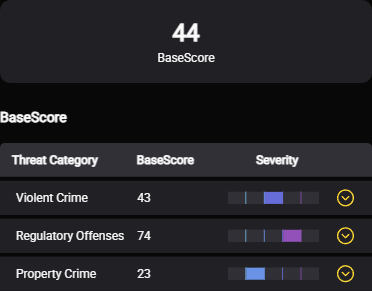
Transit Hub (0.5-mile radius - Exposición Station):
- Total Incidents: 182 (24-month period).
- BaseScore: 27 (Low Risk Tier).
- Specific Risks: Despite the low overall score, specific violent incidents (7 attacks, 3 armed clashes) have been recorded.
- Infrastructure: The station is 0.9 km from the stadium. It lacks adequate climate control for the anticipated surge capacity, increasing crowd crush and heat stroke risks.
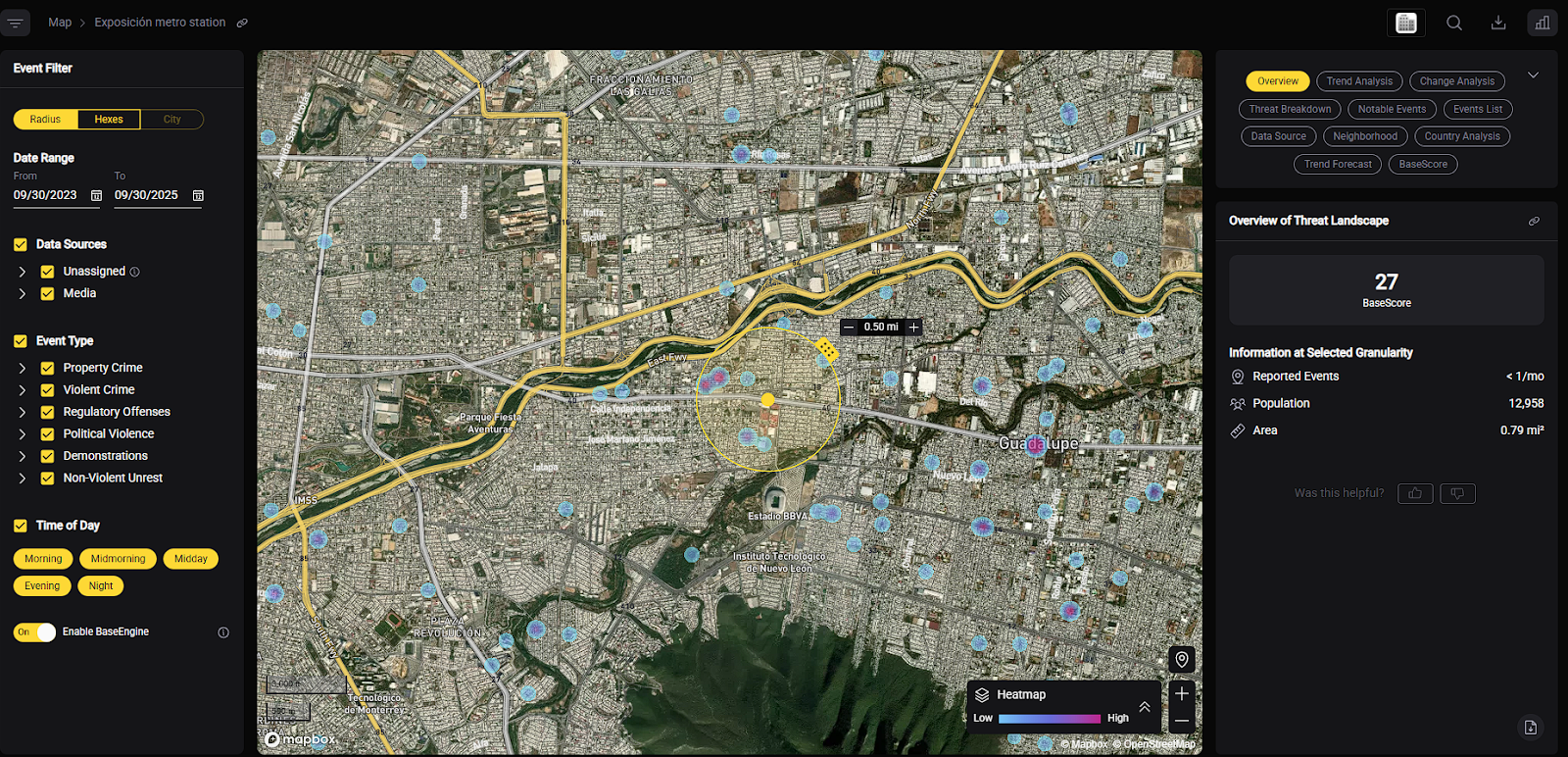
Transportation Chokepoints Avenida Pablo Livas serves as the primary access route and is identified as a significant congestion risk. While Base Operations data shows minimal vehicle theft in the immediate vicinity, regional intelligence indicates that slow-moving traffic on this artery creates ideal conditions for carjacking and vehicle interdiction.
4. Historical Incident Review
Stadium-Specific Security History Estadio BBVA has maintained a stable security record for high-attendance domestic and international matches. There are no documented mass casualty events or structural failures at the venue. However, regional precedents, such as the 2018 stabbing incident involving Monterrey ultras at a separate facility, demonstrate the latent capacity for organized hooligan violence.
Regional & Comparable Disruptions
- Querétaro Stadium Riot (March 2022): A catastrophic security failure at Estadio La Corregidora resulted in 26 serious injuries and exposed inadequate private security screening. This event prompted zero-tolerance policies and enhanced police presence requirements that remain in effect.
- Torreón Shooting (August 2011): A match was abandoned due to a cartel firefight outside the stadium, illustrating how external TOC violence can directly impact sporting events.
Base Operations Historical Crime Patterns Monthly trend analysis identifies distinct seasonal patterns for the stadium zone:
- August Peak: Historically the highest risk month, averaging 148 incidents (32% above annual average).
- World Cup Window (June-July): Historically reflects below-average incident counts (114–115 incidents per month). However, this baseline does not account for the visitor influx or TOC targeting incentives unique to a World Cup.
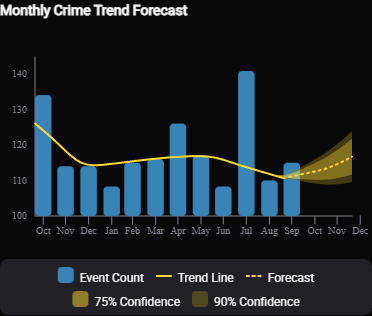
5. Current Threat Landscape
5.1 Crime Trends & Opportunistic Threats
Confidence Level: High (Based on validated Base Operations Data)
The 5-mile radius surrounding the stadium recorded 3,393 incidents over the 24-month assessment period. The threat landscape is dominated by property and financial crimes rather than violent felonies, though violent crime remains a persistent moderate threat.
Key Statistical Findings:
- Vandalism: 498 incidents (15% of total).
- Fraud: 447 incidents (13% of total; Severity 4).
- Violent Crime: Averaged 44 incidents per month.
- Property Crime: Averaged 40 incidents per month, with a significant spike recorded in August 2024 (59 incidents).
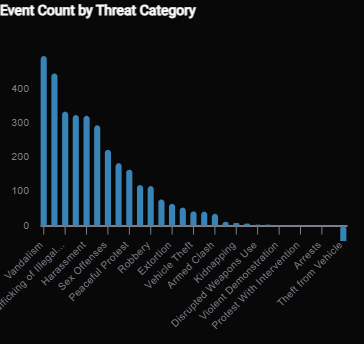
Vehicle-Related Threats: Base Operations recorded 43 vehicle theft incidents (2 per month). This low figure is deceptive; it likely reflects theft of unattended vehicles. The primary tactical threat for VIPs is express kidnapping via vehicle interdiction during egress gridlock. This threat vector is not captured in standard theft statistics but is supported by regional intelligence confirming rising kidnapping rates targeting perceived wealth.
5.2 Terrorism & Organized Crime
Confidence Level: Medium
Transnational Organized Crime (TOC): The operational area is contested territory for major cartels, including the Sinaloa Cartel (CDS), Gulf Cartel (CDG), and Northeast Cartel (CDN).
- Status: These groups are designated as Foreign Terrorist Organizations (FTOs) by US authorities but operate primarily as profit-driven enterprises rather than ideological terrorists.
- Risk Profile: Indiscriminate mass-casualty attacks at the stadium are assessed as unlikely, as they would invite overwhelming military responses bad for business.
- Targeting: The primary risk is the specific targeting of high-value individuals (corporate executives, government officials) for kidnapping or assassination. The October 2025 arrest of a CDS facilitator in Monterrey confirms active high-level operations in the area.
5.3 Activist & Protest Activity
Confidence Level: High
Environmental Civil Unrest: Monterrey faces acute water scarcity approaching "Day Zero" conditions.
- Tactics: Precedent exists for arson attacks on infrastructure and highway blockades by water rights activists.
- Triggers: Extreme temperatures (>40°C) combined with water rationing during the tournament window create a volatile environment.
- Impact: Activist blockades targeting corporate sponsors or transport routes are the most probable disruption threat. World Cup sponsors associated with resource extraction are high-visibility symbolic targets.
5.4 Cyber & Information Risks
Confidence Level: High
Financial Fraud & Digital Scams: With Fraud ranking as a Severity 4 threat (447 incidents), the digital threat environment is sophisticated.
- Vectors: AI-powered deepfake scams, counterfeit hospitality packages, and QR code fraud at venue perimeters.
- Espionage: Corporate executives face elevated risks of spear-phishing and intellectual property theft via compromised local networks (hotels, public Wi-Fi).
- Insider Threat: Corruption incidents (78 recorded) suggest a risk of insider facilitation, where hotel staff or transport personnel may sell VIP itinerary data to criminal networks.
6. Threat Actor Profiles
Transnational Organized Crime (TOC) Groups
- Actors: Sinaloa Cartel, Gulf Cartel, Northeast Cartel.
- Capabilities: Military-grade armaments (.50 caliber, explosives), extensive human intelligence networks, and sophisticated cyber capabilities.
- Motivation: Profit maximization. While they generally avoid heat from international incidents, the FTO designation may incentivize retaliatory targeting of US interests or energy/logistics executives.
Opportunistic Criminal Networks
- Actors: Independent street-level criminals and organized pickpocket teams.
- Capabilities: Distraction theft, bag-snatching, and short-duration "express" kidnappings for ATM withdrawals.
- Targeting: Visibly wealthy individuals, distracted tourists, and attendees in crowded transport hubs. Base Operations data attributes the majority of harassment and theft incidents to these actors.
7. Key Takeaways
9.1 Corporate Security Director - Executive Briefing
Estadio BBVA represents a Medium Risk (BaseScore 43) environment that requires High Risk protocols due to situational factors. The convergence of extreme heat, water scarcity, and active cartel operations creates a complex security challenge.
- Primary Physical Threat: Vehicle interdiction during post-match egress. Static parking security is less critical than secure transit.
- Environmental Protocol: Heat-stress plans are mandatory. The power grid and water infrastructure are liable to fail; reliance on municipal services should be minimized.
- Transport Mandate: Public transit (metro) is not recommended for VIPs due to overcrowding and lack of security controls. Utilizing hardened, chauffeured ground transport is essential.
- Insider Threat: Vetting of local support staff is critical due to the prevalence of corruption and cartel infiltration in service industries.
9.2 Security Analyst - Intelligence Integration
- Monitoring Rhythm: Implement a daily monitoring protocol using Base Operations to track incident spikes in the 5-mile radius.
- Trend Analysis: Pay specific attention to the "Regulatory Offenses" and "Fraud" categories, as spikes here may indicate pre-operational probing or sophisticated scams targeting the event.
- Geographic Focus: While the Transit Hub has a lower BaseScore (24), this reflects density, not safety. The lack of incident data in the immediate station vicinity should not be interpreted as a safe corridor, particularly given the confirmed presence of armed clashes in the data set.
8. Appendices
Acronyms
- CDG: Gulf Cartel
- CDN: Northeast Cartel
- CDS: Sinaloa Cartel
- FIFA: Fédération Internationale de Football Association
- FTO: Foreign Terrorist Organization
- TOC: Transnational Organized Crime
Key Contacts
- US Government: US Consulate General Monterrey (Regional Security Officer); US Embassy Mexico City (Security Cooperation Office).
- Mexican Authorities: Protección Civil Nuevo León; State Police (Policía Estatal); Municipal Police Guadalupe.
- Emergency Services: National Emergency Number (911); Hospital Zambrano Hellion; Christus Muguerza.
- Event Security: FIFA World Cup Security Coordination Center; Estadio BBVA Security Director.
Methodology
Data Sources:
- Base Operations Validated Intelligence: Geographic scope: 5-mile radius around Estadio BBVA; 0.5-mile radius around Exposición metro station. Temporal scope: September 30, 2023 - September 30, 2025 (24-month historical data). Data categories: 30 threat categories including violent crime, property crime, fraud, regulatory offenses, protests, and conflict events. Validation: Base Operations employs standardized, validated methodologies with monthly updates.
- Research Reports: GPT Research Report and Gemini Research Report (Historical context, regional security analysis, threat actor assessment, environmental factors). Sources include open-source intelligence, government travel advisories, academic research, and news reporting.
Confidence Framework:
- High Confidence: Assessments based on Base Operations validated data, official government sources, or multiple corroborating sources. Probability >75% that assessment is accurate.
- Medium Confidence: Assessments based on credible single sources, trade media, or expert analysis with limited corroboration. Probability 50-75% that assessment is accurate.
- Low Confidence: Assessments based on social media reports, unverified claims, or analytical extrapolation. Probability <50% that assessment is accurate.
Data Limitations
Base Operations data current September 2023 – September 2025. Cyber threats not captured in Base Operations metrics. Private security incidents may be underreported. Historical patterns may not predict novel threat vectors. This assessment represents analysis current as of November 19, 2025. Threat conditions may evolve rapidly. Continuous monitoring through Base Operations and coordination with law enforcement partners is essential for maintaining situational awareness throughout the tournament period.
9. References
- Base Operations Platform. (2023-2025). Estadio BBVA Stadium Radius Threat Intelligence Data (5-mile radius). Dataset covering September 30, 2023 - September 30, 2025. Accessed November 19, 2025.
- Base Operations Platform. (2023-2025). Exposición Metro Station Radius Threat Intelligence Data (0.5-mile radius). Dataset covering September 30, 2023 - September 30, 2025. Accessed November 19, 2025.
- GPT Research Report. (2025). Threat Assessment: FIFA World Cup 2026 - Estadio BBVA (Monterrey, Mexico) Historical / Contextual Research - Current Threat Landscape. Comprehensive research compilation including citations to: U.S. Department of State travel advisories (travel.state.gov), ESPN reporting on security incidents (espn.com), El Financiero cartel violence reporting (elfinanciero.com.mx), Mongabay environmental analysis (news.mongabay.com), Reuters heat wave coverage (reuters.com), Phys.org climate reporting (phys.org), DarkReading cybersecurity analysis (darkreading.com), Associated Press political reporting (apnews.com), and additional sources. Accessed November 19, 2025.
- Gemini Research Report. (2025). Comprehensive Threat Assessment: Estadio BBVA (Monterrey) for FIFA World Cup 2026. Research compilation including citations to: DNI.gov NCTC operations (dni.gov), Sigma360 risk intelligence (sigma360.com), SAIS Review economic analysis (saisreview.sais.jhu.edu), Hyperion Services kidnapping assessment (hyperionservices.co), Harvard GSD water crisis research (gsd.harvard.edu), Climate Resilience Center analysis (onebillionresilient.org), The Guardian water scarcity reporting (theguardian.com), and additional sources. Accessed November 19, 2025.
- U.S. Department of State. (2025). Mexico Travel Advisory (Level 2: Exercise Increased Caution). https://travel.state.gov. Updated August 12, 2025. Accessed November 10, 2025.
- DNI.gov. (2025). NCTC Supports Arrest of Sinaloa Cartel Member, Keeping Americans Safe During Democrat Shutdown. https://www.dni.gov/index.php/newsroom/press-releases/press-releases-2025/4116-pr-3 3-25. Accessed November 10, 2025.
- Sigma360. (2025). A Mission That Didn't Stop: Inside the Sinaloa Cartel Arrest During the Government Shutdown. https://www.sigma360.com/knowledge-center/sinaloa-cartel-arrest-ai-risk-intelligence. Accessed November 10, 2025.
- SAIS Review. Triangular Economic Cooperation Key to Combatting Mexico's Illicit Drug Economy. https://saisreview.sais.jhu.edu/triangular-economic-cooperation-key-to-combatting-mexic os-illicit-drug-economy/. Accessed November 10, 2025.
- Hyperion Services. Americans Kidnapped in Mexico: 2021 - 2025. https://hyperionservices.co/americans-kidnapped-in-mexico/. Accessed November 10, 2025.
- Harvard Graduate School of Design. (2023). Resilience Under New Water Regimes: The Case of Monterrey, [MX] Day-Zero. https://www.gsd.harvard.edu/course/resilience-under-new-water-regimes-the-case-of-mo nterrey-mx-day-zero-spring-2023/. Accessed November 10, 2025.
- Climate Resilience Center. Hot Cities, Chilled Economies: Monterrey, Mexico. https://onebillionresilient.org/hot-cities-chilled-economies-monterrey/. Accessed November 10, 2025.
- The Guardian. (2022). 'It's plunder': Mexico desperate for water while drinks companies use billions of litres. https://www.theguardian.com/global-development/2022/jul/28/water-is-the-real-thing-but- millions-of-mexicans-are-struggling-without-it. Accessed November 10, 2025.
- El Financiero. (2025). Choque entre Cártel del Noreste y policías deja dos muertos... (Cartel clash leaves 2 dead, 7 arrested in Nuevo León). https://elfinanciero.com.mx. October 28, 2025. Accessed November 10, 2025.
- ESPN. (2011). MEXICO: Gunshots end Santos-Morelia. https://espn.com. August 23, 2011. Accessed November 10, 2025.
- Mongabay. (2024). Across Mexico, World Cup infrastructure threatens biodiversity and communities by Alice Pistolesi & Monica Pelliccia. https://news.mongabay.com. July 2, 2024. Accessed November 10, 2025.
- Reuters. (2023). Mexico swelters as 'atypical' heat wave grips nation by Brendan O'Boyle and Daniel Becerril. https://reuters.com. June 16, 2023. Accessed November 10, 2025.
- DarkReading. (2024). How Soccer's 2022 World Cup in Qatar Was Nearly Hacked by Jai Vijayan. https://darkreading.com. April 3, 2024. Accessed November 10, 2025.
- Associated Press. (2023). Protesters shove their way into Nuevo León congress, toss smoke bomb. https://apnews.com. November 30, 2023. Accessed November 10, 2025.
- Air Charter Service. (2023). World Cup 2026 Stadium Guide: Estadio BBVA (Guadalupe, NL). https://aircharterservice.com. Accessed November 10, 2025.
- Quadratín Nuevo León. (2025). Implementan operativo de seguridad por Clásico Regio en estadio BBVA. https://quadratin.com.mx. November 1, 2025. Accessed November 10, 2025.
El Universal. (2025). Liga MX: Más de seis mil elementos de seguridad... https://eluniversal.com.mx. November 8, 2025. Accessed November 10, 2025.
Takeaways
Corporate Security Director - Executive Briefing
Estadio BBVA represents a Medium Risk (BaseScore 43) environment that requires High Risk protocols due to situational factors. The convergence of extreme heat, water scarcity, and active cartel operations creates a complex security challenge.
- Primary Physical Threat: Vehicle interdiction during post-match egress. Static parking security is less critical than secure transit.
- Environmental Protocol: Heat-stress plans are mandatory. The power grid and water infrastructure are liable to fail; reliance on municipal services should be minimized.
- Transport Mandate: Public transit (metro) is not recommended for VIPs due to overcrowding and lack of security controls. Utilizing hardened, chauffeured ground transport is essential.
- Insider Threat: Vetting of local support staff is critical due to the prevalence of corruption and cartel infiltration in service industries.
Security Analyst - Intelligence Integration
- Monitoring Rhythm: Implement a daily monitoring protocol using Base Operations to track incident spikes in the 5-mile radius.
- Trend Analysis: Pay specific attention to the "Regulatory Offenses" and "Fraud" categories, as spikes here may indicate pre-operational probing or sophisticated scams targeting the event.
- Geographic Focus: While the Transit Hub has a lower BaseScore (24), this reflects density, not safety. The lack of incident data in the immediate station vicinity should not be interpreted as a safe corridor, particularly given the confirmed presence of armed clashes in the data set.
Enter any address. Get BaseScore, crime trends, threat breakdowns, and actionable intelligence in 90 seconds.