
Concert Security: The Complete Planning and Operations Guide
A practitioner guide to concert security planning: threat assessment, access control, crowd management, staffing ratios, technology, and a data-driven approach to venue-area risk.
What Is Concert Security?
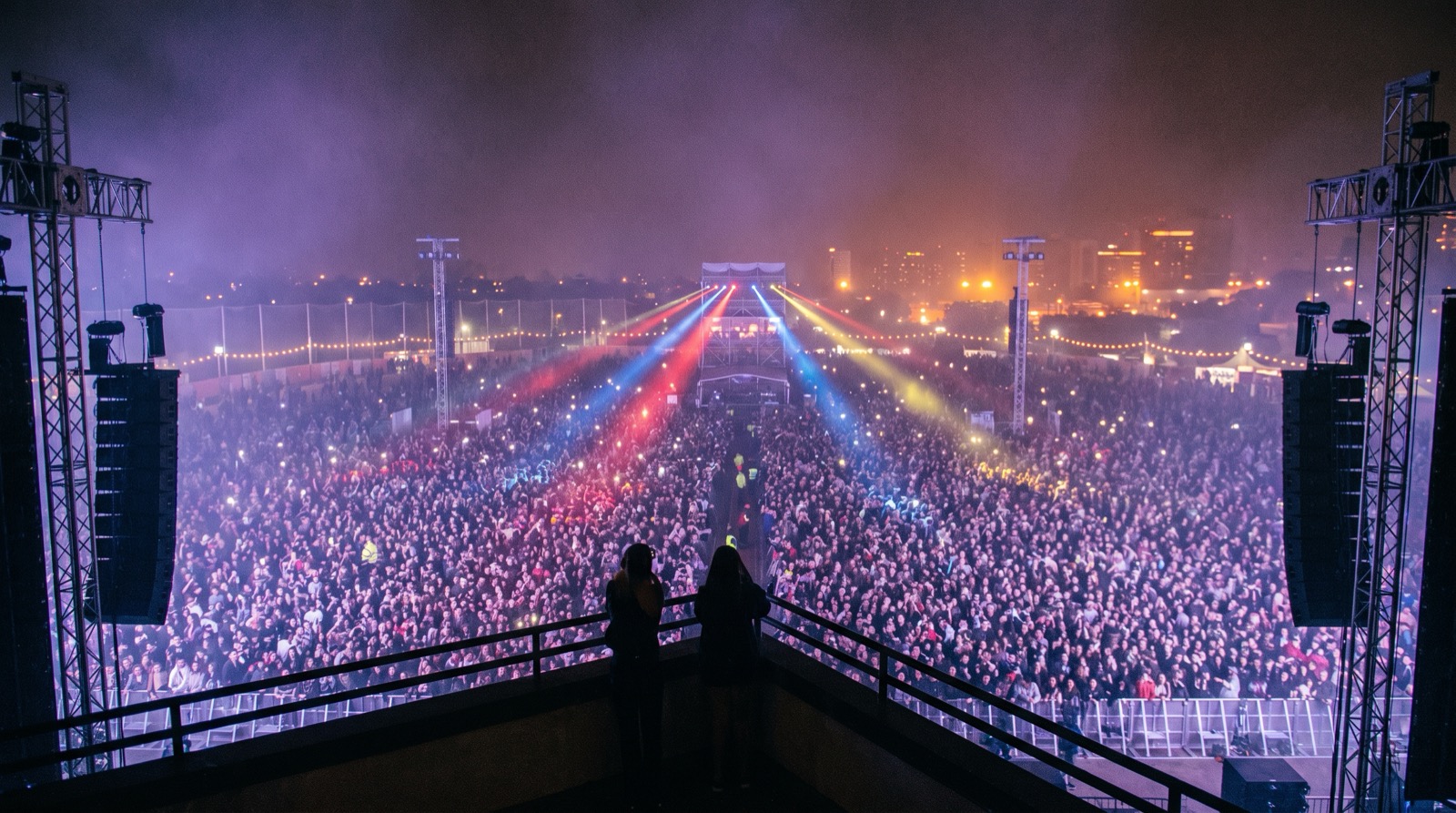
Concert security is the coordinated system of threat assessment, access control, crowd management, and emergency response designed to protect attendees, performers, and staff at live music events. Effective concert security begins weeks before doors open with venue-specific threat analysis and continues through a post-event review that feeds the next event cycle. Concert security differs from general event security because of high-energy crowds, alcohol consumption, limited sightlines, amplified noise that impairs verbal communication, and high-value targets such as performers and VIPs.
A single concert event can span several distinct location types within one operation: the venue itself, a nearby hotel housing staff or performers, a backstage production area, and parking facilities, each with its own risk profile. A security team coordinating remote event operations for a global media and entertainment company has described this directly: staff may be lodging at a hotel with a markedly lower risk score than the production site a few blocks away. Treating an entire event footprint as one undifferentiated area misses the variation that drives security decisions.
Effective planning also requires specificity rather than general situational summaries. A production security team supporting a global entertainment company has emphasized that practitioners need threat-category-level detail, knowing that aggravated assault and robbery are the primary drivers of risk at a given venue, rather than a broad, non-specific briefing. That level of detail, not a generic staffing formula applied uniformly, is what makes concert security an intelligence-led discipline.
Why Concert Security Failures Make Headlines
Concert security failures generate public scrutiny because the consequences are immediate, visible, and often fatal. The incidents below illustrate recurring failure patterns and the stakes behind every planning decision.
Crowd Surge and Crush Incidents
Crowd surge and crush is the single most lethal recurring threat at concerts and large gatherings. The 2021 Astroworld Festival in Houston resulted in 10 deaths after a crowd surge toward the stage, with guard testimony pointing to understaffing and inadequate crowd-control training. The 2022 Seoul Halloween crush, which killed 159 people in a narrow street near Itaewon, occurred at an unticketed gathering with no formal crowd management plan. General admission stampedes at venue entrances follow a similar pattern: uncontrolled entry flow combined with inadequate lane systems and insufficient chokepoint staffing.
Targeted Violence and Terrorism
Concert venues are classified by the Cybersecurity and Infrastructure Security Agency (CISA) as "soft targets," meaning locations with high concentrations of people and comparatively limited security infrastructure. The 2017 Route 91 Harvest Festival shooting in Las Vegas killed 60 people after a shooter fired from an elevated position outside the venue perimeter, exposing gaps in perimeter and external-area threat monitoring. The 2017 Manchester Arena bombing killed 23 people following an Ariana Grande concert, showing that threats can materialize at exit points rather than inside the security perimeter. In 2024, authorities disrupted a planned attack targeting Taylor Swift's Vienna concerts, underscoring that high-profile performers remain active targets requiring dedicated threat monitoring.
The Cost of Inadequate Planning
The financial and organizational consequences of inadequate concert security extend well beyond the event itself. Litigation following the Astroworld tragedy resulted in settlement claims exceeding $2 billion. Beyond litigation, security failures drive higher insurance premiums, increased regulatory scrutiny from permitting authorities, lasting reputational damage, and in some cases, cancellation costs that threaten a venue's or promoter's financial viability.
Security investment, however, is too often approved only after an incident forces the issue. A security director overseeing a professional sports and entertainment venue has described this pattern: teams typically know what resources they need and how to request them, but approval is inconsistent, and when it finally comes, it is usually because a preventable problem already occurred. This reactive pattern repeats industry-wide in part because threat research remains manual: a security leader at a global entertainment production company has noted that without a systematic intelligence process, teams are "flying blind," and the ad hoc alternatives are inconsistent, expensive, and difficult to scale across a global footprint.
The 7 Core Components of a Concert Security Plan
A complete concert security plan organizes around seven core components, each addressing a distinct phase of the event lifecycle, from pre-event intelligence gathering through post-event documentation.
1. Pre-Event Threat Assessment
A threat assessment is the intelligence-gathering process that analyzes crime patterns, time-of-day risk windows, historical incident data, and current threat intelligence around a venue before security planning begins. Planning starts with the threat environment surrounding the venue, not just the risk inside it: crime patterns within a quarter-mile radius, time-of-day risk windows, and current intelligence on protests, civil unrest, and performer-specific threats. Data-driven platforms such as Base Operations support this phase with hyperlocal crime intelligence at 0.1-mile granularity, replacing the general area-reputation judgments that have historically driven venue risk decisions.
A case study involving a Fortune 500 ERP provider illustrates what this precision produces: 0.1-mile radius analysis around a dense urban event location, scored with 75-90% confidence, identified approximately two crimes likely within the immediate venue radius on event day, alongside a protest database surfacing historic demonstration organizer, location, and objective details. A separate case study involving a Fortune 500 CRM provider used 0.3-mile radius analysis with automated BaseScore monitoring across venues, hotels, transportation hubs, and entertainment facilities, cutting venue comparison time from roughly six hours to thirty minutes.
Threat-category specificity also matters. A production security team at a global entertainment company has pointed to the value of knowing precisely which categories, such as aggravated assault and robbery, drive risk at a specific venue, rather than receiving a generic area summary. The same team flagged the value of monitoring cadence for venues used infrequently: for annual festival stops or one-time productions, earlier notice of a meaningful risk shift changes planning decisions well before event day, which is why a monthly or bi-weekly refresh cycle, not a static one-time check, supports touring and seasonal events.
2. Access Control and Perimeter Security
Access control covers entry screening methods including metal detectors, bag checks, and wanding, alongside credential systems, perimeter fencing and barriers, vehicle mitigation measures such as bollards and jersey barriers, and drone detection. CISA's Public Venue Security Screening Guide (2021) serves as the federal benchmark for screening procedures, staffing levels, and equipment standards at venues of varying size and risk level.
3. Crowd Management Strategy
Crowd management strategy addresses crowd density monitoring, flow control using barricades and lane systems, capacity management by zone, and egress planning. Egress is the process of moving attendees safely and efficiently out of a venue or zone, and industry practitioners consistently describe it as the single most overlooked part of concert security planning. Guard-to-attendee ratios scale with event energy level: high-energy concerts with alcohol service typically require one guard per 25-50 attendees.
Crowd crush is a life-threatening condition in which compacted bodies exert enough pressure to prevent normal breathing and movement, and it carries specific, identifiable warning signs. Security staff and trained spotters should watch for an inability to lift one's arms, involuntary movement in a direction the person did not choose, and an inability to turn around within the crowd. Any of these signs should trigger an immediate response: halting entry flow, opening additional egress routes, and redirecting crowd pressure before a surge develops.
4. Emergency Response Protocols
The written Emergency Response Plan (ERP) documents evacuation routes, rally points, medical staging areas, communication chains, and coordination procedures with law enforcement, fire, and EMS. An ERP that exists only as a document provides limited protection: it must be rehearsed by the full security team before the event, not referenced for the first time during an actual emergency.
5. Communication Systems
Multi-channel communication combines radio networks, mass notification systems, defined command structures, and reporting tools that keep command staff informed throughout the event. Concert noise makes verbal communication unreliable, which is why dedicated radio channels and visual signals, not shouted instructions, carry the operational load during an incident.
6. Medical Preparedness
Medical preparedness covers first aid stations, on-site paramedics, hospital coordination, and medical transport routes, typically staffed at a baseline ratio of one medical staff member per 250 attendees. Alcohol consumption, heat exposure, and crowd density each independently increase medical incident rates, and concerts frequently combine all three.
7. Post-Event Review and Documentation
After-action review includes incident debriefing, documentation of what occurred, gap analysis against the original plan, and protocol updates carried forward to future events. Post-event review generates the intelligence that improves the next event cycle rather than treating each event as an isolated exercise.
The table below distinguishes three documents that security teams frequently conflate.
Concert security threats also vary by category and venue type, which affects which mitigations deserve priority.
Concert Security Staffing: Roles, Ratios, and Costs
Key Security Roles at a Concert
A concert security operation typically fills the following roles: Security Director or Event Security Manager, entry screening staff, roving patrol officers, stage-front barrier staff, backstage and VIP security, parking and perimeter security, command post operators, and plainclothes intelligence officers.
How Many Security Guards Do You Need?
Guard-to-attendee ratios scale with event risk level. Low-risk seated events without alcohol typically require one guard per 75-100 attendees. High-energy general-admission concerts with alcohol service require one guard per 25-50 attendees. Festivals and multi-stage events generally need one guard per 50 attendees, plus dedicated stage, entry, and perimeter teams. A 5,000-person outdoor concert with alcohol service typically requires 100-200 security personnel across all roles. Staffing ratios are frequently contested budget line items rather than abstract formulas: a security director at a professional sports and entertainment venue has noted that adding one security position often means another department, such as ticket sales staff, gives up a headcount slot elsewhere. Resource constraints affect even large operations: a security team coordinating remote events for a global media company has operated an 18-person security function covering multiple concurrent high-profile productions using a limited number of available licenses.
What Does Concert Security Cost?
Unarmed security guards cost $25-$60 per hour as of 2026, while armed guards range from $40-$80 per hour, and supervisors run $50-$90 per hour. A full security package for a 1,000-person concert typically costs $8,000-$15,000, while a package for a 5,000-plus-person festival can exceed $40,000. Last-minute bookings made under 48 hours before the event typically carry a 10-15% surcharge. These costs should be weighed against the liability exposure created by inadequate security, which can exceed the cost of proper staffing many times over.
How to Plan Concert Security Step by Step
Step 1: Assess the Threat Environment
Review crime data within a quarter-mile radius of the venue, identify time-of-day risk patterns, and check active threat intelligence covering performer-specific threats, local protest activity, and recent incidents. A platform such as Base Operations can pull hyperlocal crime data across 40+ threat categories for the venue's exact location rather than the surrounding city as a whole. An event security risk assessment conducted ahead of a FIFA World Cup match in Philadelphia illustrates what this step produces: analysts evaluated three distinct locations tied to the event (the stadium, a nearby hotel, and an after-hours event venue), and quarter-mile radius data around the hotel alone surfaced 189 simple assaults, 58 aggravated assaults, 45 robberies, and 9 homicides, with evening hours carrying nearly twice the risk and specific high-crime streets identified by name. Without this kind of process, teams are often left relying on memory: one event security professional evaluating risk ahead of a stadium event described having no forward-looking intelligence, only the ability to recall historically what had happened near the area.
Step 2: Conduct a Venue Vulnerability Assessment
Walk the venue physically and digitally. Map every entry and exit point. Identify surveillance blind spots. Assess perimeter integrity and evaluate proximity to high-crime areas, public transit, and vehicle access points. Score the venue's vulnerability using a structured framework rather than an informal walkthrough alone.
Step 3: Calculate Staffing and Resource Requirements
Based on the threat assessment and vulnerability score, determine staffing ratios, equipment needs (detectors, barriers, radios, cameras), and medical resources. Build the staffing plan by zone: entry, perimeter, interior, stage-front, backstage, parking, and command post.
Step 4: Build the Emergency Response Plan
Document evacuation routes, medical staging areas, and communication protocols for coordination with law enforcement. Identify the nearest hospitals and their trauma capacity. Designate a unified command post and assign clear emergency-declaration authority before the event, not during one.
Step 5: Brief and Rehearse
Conduct a pre-event briefing covering threat intelligence, assigned posts, communication protocols, and emergency procedures. Run a tabletop exercise for high-probability scenarios, including crowd surge, medical emergency, and active threat response. Confirm that every team member understands the chain of command.
Step 6: Execute, Monitor, and Adapt
Maintain continuous monitoring of crowd density, entry flow, and the external threat environment throughout the event. Use surveillance and trained spotters to identify emerging issues early. Maintain open communication with law enforcement and medical teams for the duration of the event.
Step 7: Debrief and Document
Within 24-48 hours of the event, conduct a formal after-action review. Document incidents, near-misses, and protocol deviations. Identify what worked, what failed, and what must change. Archive the documentation for insurance, legal, and future planning purposes. This same seven-step process underpins multi-site security planning for major tournaments, including the NCAA Final Four threat brief.
Concert Security Technology: What Works in 2026
Threat Intelligence and Location Data Platforms
Platforms such as Base Operations provide hyperlocal crime intelligence, drawing on 250M+ threat incidents across 190+ countries at 0.1-mile granularity, enabling data-driven threat assessment before the event takes place. This differs from the traditional approach of relying on a venue's general area reputation or outdated statistics. Intelligence-driven planning identifies the specific streets and time windows carrying elevated risk, which supports targeted resource deployment instead of uniform staffing around an entire perimeter.
The same methodology informed the Paris Olympics security assessment ahead of the 2024 Games.
Dedicated threat intelligence platforms also need to clear a higher bar than general-purpose AI search tools. A Global Director of Safety and Security at a global risk management and insurance brokerage firm described testing this directly: asking a general AI chatbot about an upcoming trip surfaces useful but surface-level results, such as noting a nearby music festival or protest group, without the location-specific granularity, confidence scoring, or systematic monitoring a dedicated platform provides. That gap persists even at large organizations: an SVP of Security and Surveillance at a multi-location gaming and entertainment company overseeing more than 80 locations has described the current process as primarily manual, running the data and reviewing which day and time incidents concentrate, without a standardized risk scoring methodology in place.
AI-Powered Surveillance and Crowd Analytics
AI-powered weapon detection at entry points, crowd density monitoring with heatmaps, and behavioral analytics that flag suspicious activity are now standard components of the concert security technology stack. These systems augment trained security personnel; they do not replace them.
Access Control and Screening Technology
Walk-through metal detectors, millimeter wave scanners, facial recognition at entry points, mobile credentialing, and drone detection or counter-UAS systems round out the modern access control stack. CISA's Public Venue Security Screening Guide remains the federal benchmark for selecting and deploying this equipment.
Communication and Mass Notification
Dedicated radio networks, mobile command centers, mass notification apps, and social media monitoring for emerging threats form the communication layer of a modern concert security operation. Communication redundancy is critical: primary radio, backup cellular, and physical runner protocols should all be established before the event, so no single point of failure can sever command communication during an incident.
Planning security for an upcoming concert or event? Pull a BaseScore for your venue location and see threat data at 0.1-mile granularity. Request a Demo
How Location-Based Crime Intelligence Transforms Concert Security Planning
Traditional concert security planning relies on general venue reputation, past experience, and standard staffing formulas applied uniformly across the entire perimeter. Intelligence-driven planning instead draws on current crime patterns within 0.1 miles of specific access points, time-of-day risk analysis, and threat category breakdowns specific to the venue's immediate surroundings. The practical difference is significant: traditional planning deploys security uniformly around a venue perimeter, while intelligence-driven planning can identify that one entrance faces a street carrying three times the assault rate of another entrance and concentrate resources accordingly.
A case study involving a Fortune 500 ERP provider demonstrates this shift directly. For a dense urban event near a major metropolitan park, the security team replaced generic city-wide crime reporting, which had averaged risk across more than 20 square miles, with 0.1 to 0.2-mile radius analysis that identified specific elevated-risk blocks and access points, letting advance agents calibrate protective posture by exact entrance and approach route rather than applying a uniform deployment. A separate case study involving a Fortune 500 CRM provider found that 0.3-mile radius analysis around each venue enabled coverage of three times as many locations with the same headcount and delivered risk assessments 72 hours faster than the team's prior manual process.
BaseScore is a five-tier risk score built on 250M+ threat incidents across 190+ countries, refreshed monthly or bi-weekly, that gives security teams a standardized way to compare risk across locations. For concert security specifically, this data feeds directly into threat assessment, staffing allocation decisions, and resource deployment at the entrance, zone, and street level rather than treating the venue perimeter as a single uniform risk area.
Base Operations provides hyperlocal crime intelligence for concert venues and event locations across 190+ countries. See how security teams use BaseScore to assess venue-area threats before events. Explore Event Security Use Cases
Multi-Venue Concert Security: Festivals, Tours, and Residencies
Securing a single venue is one problem. Securing a festival with multiple simultaneous stages, a touring act performing in a different city each night, or a corporate concert series spanning several markets is a more complex problem, and no standard methodology directly addresses it. High-profile precedents such as Super Bowl security planning follow this same portfolio logic across multiple sites.
The methodology extends logically from single-venue planning: establish a baseline risk profile for each venue in the portfolio, compare risk scores across all locations side by side, allocate security resources proportionally to each venue's relative risk level, and develop location-specific protocols for each site rather than applying one generic plan everywhere. A security team coordinating remote events for a global media and entertainment company provides a direct structural parallel, comparing threat levels between venues, hotels, and transportation routes across concurrent productions to prioritize resources, the same comparison a touring act or multi-stage festival must make across its own active sites. A case study involving a Fortune 500 CRM provider shows this operating at scale: a security team securing corporate events across more than 10 locations annually used a centralized dashboard for side-by-side venue comparisons, reallocating roughly 15 days of analyst time per event from manual comparison to higher-value monitoring work.
This approach also supports episodic monitoring needs specific to touring acts and seasonal festivals that return to the same venues infrequently. A global consumer products company has described exactly this need: monitoring its event locations once a year, with immediate notification only if a significant change occurs in between, plus an annual retrospective review.
Concert Security Checklist: Pre-Event, Day-Of, and Post-Event
Pre-Event (2-8 Weeks Before):
- Conduct venue-area threat assessment using current crime data
- Complete venue walk-through and vulnerability assessment
- Calculate staffing requirements by zone
- Hire and vet security personnel (background checks, certifications)
- Draft Emergency Response Plan (ERP)
- Coordinate with local law enforcement and EMS
- Install and test screening equipment (metal detectors, cameras)
- Establish communication systems and test radio channels
- Brief insurance carrier on security plan
- Conduct tabletop exercise with key staff
The first item on this list, the venue-area threat assessment, is where data quality matters most. A case study involving a Fortune 500 ERP provider shows what a properly executed assessment produces: analysts reviewed recent crime data for the specific blocks surrounding the venue, identifying the most likely incident types and their timing patterns throughout the event day.
Day-Of (Event Day):
- Conduct all-hands security briefing with threat intelligence update
- Activate access control and screening at all entry points
- Deploy personnel to assigned zones
- Open command post and confirm all communication channels
- Monitor crowd density continuously by zone
- Maintain continuous coordination with law enforcement
- Staff medical stations and confirm hospital transport routes
- Monitor external environment (social media, local incidents)
- Manage egress flow at event conclusion
Post-Event (24-48 Hours After):
- Conduct after-action debrief with all security leads
- Document all incidents, near-misses, and protocol deviations
- Archive surveillance footage and incident reports
- Conduct gap analysis and update protocols
- Submit documentation to insurance carrier and legal team
- Update threat assessment for future events at same venue
Regulatory and Insurance Requirements for Concert Security
Federal Guidance: CISA and DHS
CISA's "Security of Soft Targets and Crowded Places" resource guide and the DHS Public Venue Security Screening Guide (2021) classify concert venues as soft targets and provide free tools covering threat assessment, screening procedures, and emergency response planning. These resources function as a baseline benchmark that most municipal permitting processes implicitly reference. The same federal framework alignment guided the UN General Assembly security assessment for a major diplomatic gathering.
Local Permitting and Licensing
Most municipalities require a documented security plan as a condition of granting an event permit. Fire marshals enforce capacity limits, egress requirements under NFPA 101, and emergency access provisions, and security staffing minimums are frequently codified in local ordinances rather than left to venue discretion.
Insurance Requirements
Event liability insurers increasingly require documented threat assessments and security plans before issuing coverage. Inadequate security documentation can void coverage entirely or result in a denied claim. Data-driven security plans built on documented threat assessments strengthen the relationship with an insurer and can reduce premium costs over time. A case study involving a Fortune 500 ERP provider illustrates the broader impact: the security team's shift to data-driven risk assessments elevated the function's visibility, with assessments shared directly with executives, reflecting a move from reactive support function to strategic advisor. The reverse is also true: a security director at a professional sports and entertainment venue has noted that inadequate planning, paired with funding approved only after an incident, creates compliance and coverage exposure beyond the operational risk itself.
Frequently Asked Questions
What does concert security do?
Concert security protects attendees, performers, and staff through a coordinated system of threat assessment, access control, crowd management, and emergency response. Responsibilities include screening entrants for weapons and prohibited items, managing crowd flow and density, securing backstage and VIP areas, monitoring for threats, and coordinating with law enforcement and medical teams during emergencies.
How much does concert security cost?
Concert security costs depend on venue size, attendee count, risk level, and geographic location. Unarmed security guards typically cost $25-$60 per hour, while armed guards range from $40-$80 per hour. A full security package for a 1,000-person concert typically runs $8,000-$15,000, while large festivals with 5,000-plus attendees can exceed $40,000. One case study documented cutting venue cost and risk comparisons from six hours to thirty minutes using automated location-based scoring.
How many security guards do I need for a concert?
The industry standard is one security guard per 25-50 attendees for high-energy concerts where alcohol is served, and one per 75-100 for lower-risk seated events. A 5,000-person outdoor concert with general admission and alcohol service typically requires 100-200 security personnel across entry screening, roving patrol, stage-front, backstage, perimeter, and command post roles. Even large, well-resourced operations work within real staffing limits: one global media and entertainment company's security team has managed an 18-person function covering multiple concurrent major productions, underscoring why ratio-based planning, not ad hoc staffing, is essential.
What are the biggest security threats at concerts?
The most significant concert security threats include crowd surge and crush (the deadliest recurring risk), targeted violence and terrorism (active shooters, bombings), unauthorized access, theft, drug and alcohol incidents, medical emergencies amplified by crowd density, and weather-related hazards at outdoor events. Vehicle attacks at outdoor venues have also emerged as a growing threat category, particularly where street-adjacent perimeters are involved.
How do you plan security for a large concert?
Start with a threat assessment of the venue and surrounding area using current crime data. Conduct a venue vulnerability assessment mapping all entry and exit points and blind spots. Calculate staffing requirements by zone based on threat level and attendee count. Build a written Emergency Response Plan with evacuation routes, medical staging, and law enforcement coordination. Brief all security personnel and rehearse before the event. One case study used 0.3-mile radius analysis to cover three times as many venues with the same headcount, delivering risk assessments 72 hours faster than a manual process.
Do concerts legally require security?
Most municipalities require documented security plans as a condition of event permits, and fire marshals enforce capacity and egress requirements under NFPA 101. Event liability insurers increasingly mandate documented threat assessments before issuing coverage. CISA classifies concert venues as "soft targets" and provides federal guidance on security screening and threat mitigation for public gatherings.
What is the difference between concert security and concert safety?
Concert security addresses deliberate threats: unauthorized access, violence, terrorism, theft, and criminal activity. Concert safety addresses accidental hazards: crowd crush from poor flow design, trip and fall risks, medical emergencies, weather exposure, and structural failures. Both are essential and interdependent but require different expertise, planning frameworks, and stakeholder coordination.
How does crime data improve concert security planning?
Hyperlocal crime intelligence reveals specific threat patterns around a venue that general reputation cannot capture. Data-driven analysis can identify that certain streets adjacent to a venue carry significantly higher assault or robbery rates, that evening hours present elevated risk at specific locations, and that certain threat categories are more prevalent in the venue's immediate area. This enables targeted resource deployment rather than uniform staffing across all positions. One case study found that 0.1-0.2-mile radius analysis around a dense urban venue identified approximately two crimes likely within the immediate radius on event day at 75-90% confidence, plus a protest database detailing historic demonstration organizers, locations, and objectives, specificity general city-level statistics cannot provide.
What technology is used for concert security in 2026?
Modern concert security technology includes AI-powered weapon detection at entry points, crowd density monitoring with heatmaps, facial recognition systems, drone detection and counter-UAS platforms, dedicated radio networks, mass notification apps for attendees, and threat intelligence platforms that provide hyperlocal crime data for pre-event risk assessment. These systems augment trained security personnel rather than replacing them. A general AI chatbot can surface that a music festival or protest group is active near a venue, but that falls short of the granularity and confidence scoring a dedicated threat intelligence platform provides.
What should a concert security checklist include?
A comprehensive concert security checklist covers three phases: pre-event (threat assessment, venue walk-through, staffing plan, Emergency Response Plan, equipment testing, law enforcement coordination, staff briefing), day-of (access control activation, zone deployment, crowd monitoring, command post operations, medical readiness, egress management), and post-event (after-action debrief, incident documentation, gap analysis, protocol updates, insurance reporting).
What training do concert security guards need?
Concert security guards should have training in crowd management, de-escalation techniques, emergency response procedures, first aid and CPR, communication protocols, and patron screening. Many states require a security guard license. Additional training for concert environments should cover crowd crush recognition, high-noise communication, substance-related incidents, and VIP protection. Regular scenario-based exercises improve readiness for high-pressure situations.
How do you prevent crowd crush at concerts?
Preventing crowd crush requires proactive crowd density monitoring by zone, controlled entry flow using barriers and lane systems, strict capacity limits enforced by section, multiple egress routes that are clearly marked and staffed, and trained spotters positioned to identify early warning signs (inability to move freely, wave-like crowd motion, crowd pressure against barriers). The Astroworld 2021 tragedy underscored the lethal consequences of failing to implement these measures.
Security teams at venues and event organizations use Base Operations to assess location-specific threats across their event portfolio. Start with a venue risk assessment. Try Base Report
Takeaways

Join 1100+ security leaders getting new ideas on how to better protect their people and assets.