
Corporate Travel Safety in Latin America: Risks, Duty of Care & Response Protocols
A country-by-country guide to business travel safety in Latin America: risk tiers, the six core threat categories, duty of care obligations, program design, and a travel risk vendor comparison.
Corporate Travel Safety in Latin America: Risks, Duty of Care & Response Protocols
What Is Business Travel Safety in Latin America?
Business travel safety in Latin America is the practice of identifying, scoring, and mitigating the region's distinct risk profile, including express kidnapping, neighborhood-concentrated petty crime, civil unrest, and health threats such as dengue fever, through structured travel risk assessment and duty of care programs aligned with frameworks like ISO 31030:2021. The region's risk is not uniform: a trip to a well-secured business district in Mexico City carries a different threat profile than a trip to a border town two hours away, and country-level risk ratings routinely miss that gap. A defensible corporate travel safety program for Latin America combines country-level risk tiers with city and neighborhood detail, documented travel risk assessment protocols, and a vetted mix of intelligence and response vendors. This guide covers all three: country risk tiers across the region, the threat categories every travel policy must address, how to build a program using duty of care Latin America business travel standards, and how leading travel risk management platforms compare.
Why Latin America Demands a Different Corporate Security Posture
The Region Is Not Monolithic: Risk Varies Dramatically by Country
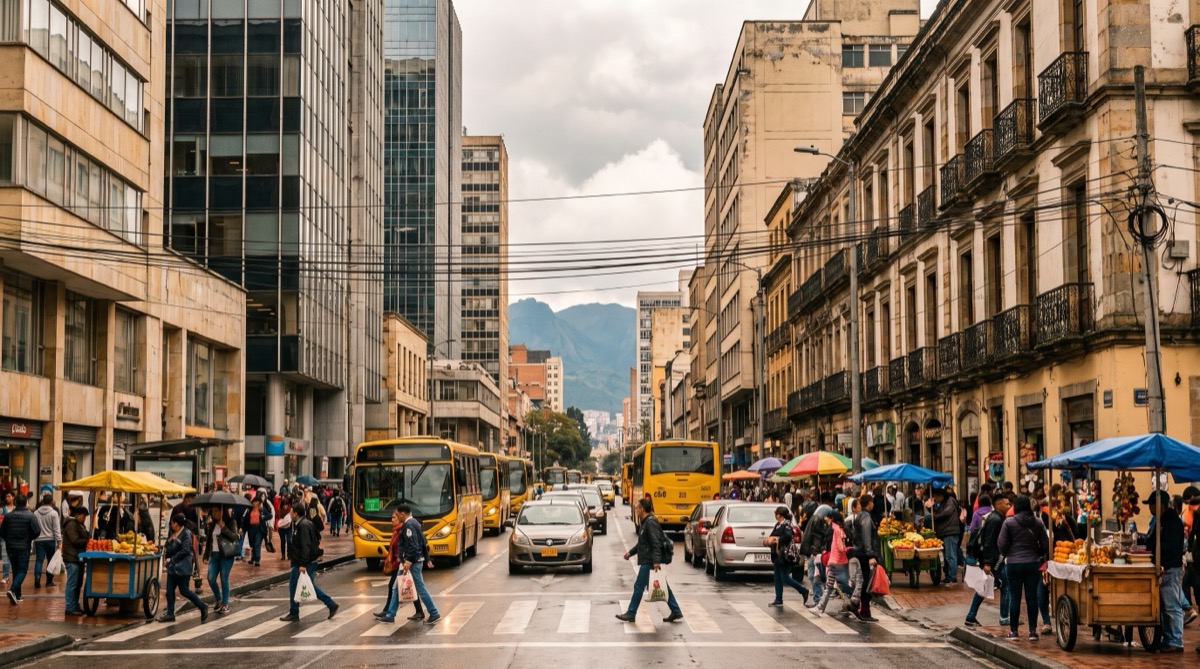
Treating Latin America as a single risk zone is the most common mistake in corporate travel policy. A Senior Manager at a Fortune 500 professional services firm put it plainly when describing the firm's travel protocols: "Going to Mexico City is one level versus going to a border town. We provide different levels of travel transportation depending on where." That distinction extends below the country level, too. The Associate Director for Supply Chain and Product Integrity at a Fortune 500 pharmaceutical company described the limitation of country-based scoring directly: "Our risk scoring on a geographic level is purely country based right now. Not all parts of a country are the same." The Head of Security at a global consumer health company made the same point about crime concentration: "Latam, it's you got a lot of petty crime. Sao Paulo, you got a lot of petty crime. In Germany, I can be sure the information won't be the same." A single country rating cannot account for the difference between a business district and a border crossing, or between a financial center and its periphery.
The Legal Stakes: Duty of Care Obligations for Corporations
Duty of care is a company's legal and ethical obligation to take reasonable steps to protect the health, safety, and security of employees traveling on its behalf. For international business travel, that obligation extends to pre-trip risk assessment, in-trip support, and emergency response, regardless of whether the destination is a client site, a conference, or a short site visit.
ISO 31030:2021 is the international standard for travel risk management, published by the International Organization for Standardization. It defines a four-phase structure, risk assessment, policy development, implementation, and review, that organizations use to build defensible travel risk programs and demonstrate duty of care compliance.
Duty of care liability is increasingly litigated, not just assumed. The World Bank has identified Latin America and the Caribbean as the region with the highest homicide rate of any region in the world, several times the global average, which raises the bar for what "reasonable steps" means when a company sends employees into the region without a documented risk assessment. Health risk compounds the legal exposure: 2024 was a record year for dengue fever across the Americas, with the Pan American Health Organization reporting the highest annual case count on record for the region. A corporate travel policy that does not account for both crime concentration and health threats, or that never gets tested against duty of care Latin America business travel obligations, is difficult to defend after an incident.
Country-Level Risk Tiers for Business Travelers in Latin America
Country risk tiers give travel security teams a starting framework, but they are a floor, not a substitute for city and neighborhood-level travel risk assessment Latin America programs require. The table below groups 18 countries into four tiers, aligned conceptually with the U.S. State Department's four-level advisory scale. State Department advisory levels change; verify current designations at travel.state.gov before finalizing any trip approval.
High-Complexity Markets: Venezuela, Honduras, Haiti, and Parts of Mexico
These markets combine active organized crime with weak state capacity. Carjacking and express kidnapping are common in specific corridors, cartel-controlled territory restricts safe routing options in parts of Mexico, and infrastructure gaps (power, medical care, reliable transportation) compound every other risk. Control Risks and the U.S. State Department both frame these as markets requiring dedicated route planning and, in many cases, protective transportation rather than standard ground travel.
Elevated-Risk Markets: Colombia, Ecuador, Guatemala, Nicaragua
Express kidnapping risk in Bogota, protest-driven disruption in Quito, and border-adjacent drug trafficking corridors in Ecuador place these markets a tier below the highest-complexity group but still well above standard corporate travel risk. Programs operating here typically require pre-trip briefings specific to the destination city, not just the country.
Moderate-Risk Markets With Localized High-Risk Zones: Brazil, Argentina, Peru, Bolivia
Brazil is the clearest example of hyper-localized risk in the region: Sao Paulo's Faria Lima financial corridor and its peripheral favelas sit minutes apart but carry dramatically different threat profiles, a distinction one corporate security leader specifically called out when describing why petty crime monitoring in Sao Paulo requires its own risk lens. Argentina and Peru carry lower baseline risk with periodic unrest spikes; Bolivia's road-blockade risk can escalate quickly during periods of political tension.
Lower-Risk Markets in Regional Context: Chile, Uruguay, Costa Rica, Panama
These markets are lower risk relative to the rest of Latin America, not globally low-risk. Airport fraud, opportunistic theft, and transportation scams remain common enough that standard pre-trip briefings and vetted transportation still apply, even for destinations that read as "safe" on a country-level dashboard.
The 6 Core Threat Categories Every Corporate Travel Policy Must Address
1. Express Kidnapping and Virtual Kidnapping
Express kidnapping is a short-duration abduction, typically lasting a few hours, in which victims are forced to withdraw cash from ATMs or hand over valuables before release. It is distinct from traditional kidnapping, which involves prolonged captivity and ransom negotiation, and from virtual kidnapping, which involves no physical abduction at all.
Virtual kidnapping is an extortion scheme in which callers convince a victim's family or employer that a person has been abducted, using stolen personal details and coached callers to create panic, then demand rapid payment before the deception is discovered. Mexico City is widely cited as the global epicenter of virtual kidnapping schemes targeting corporate travelers and their families.
Express kidnapping is most concentrated in Bogota, Lima, and Caracas, typically targeting travelers who appear affluent or use unvetted transportation.
2. Street Crime, Carjacking, and Transportation Fraud
Fraudulent taxi operations are a recurring risk in Buenos Aires, Lima, and Mexico City, and carjacking incidents cluster in specific corridors across Brazil, Mexico, and Honduras. Petty crime concentration in dense urban cores is a top-of-mind concern for security teams operating in the region: one global security leader described monitoring priorities directly, noting that Sao Paulo alone generates enough petty crime activity that it requires the same dedicated attention as an entire country elsewhere in a company's footprint.
3. Civil Unrest, Protest, and Political Instability
Chile, Peru, Ecuador, and Bolivia have each seen protest activity shut down airports or major roadways within a 24-hour window in recent years. For corporate travel programs, that speed is the operational problem: itinerary integrity depends on knowing a disruption is building before wheels-up, not after a traveler is already stranded at the gate.
4. Health Threats: Dengue, Altitude Sickness, and Medical Infrastructure Gaps
The 2024 dengue outbreak across the Americas was the largest on record, according to the Pan American Health Organization, with transmission concentrated in urban and peri-urban areas across the region. Altitude sickness is a separate but underrated risk for business travelers heading to Bogota, Quito, La Paz, or Cusco, all of which sit above 8,000 feet. Malaria risk is concentrated in the Amazon basin and parts of Central America's lowlands. Medical infrastructure quality drops sharply outside major urban centers across most of the region, which makes evacuation planning, not just prevention, a required part of the program.
5. Cyber and Information Security Risks
Public Wi-Fi networks in hotels and airports remain a common exploitation vector for business travelers carrying corporate devices. SIM-swapping attacks are disproportionately concentrated in Mexico and Brazil, and device seizure at border crossings is a documented risk in Venezuela and Nicaragua. None of these threats are unique to Latin America, but the concentration and frequency in specific countries make them a required line item in the regional travel policy rather than a generic IT footnote.
6. Infrastructure and Logistical Risks
Road quality varies enormously across the region, and informal checkpoints, some legitimate, some extortion attempts, are a recurring feature of overland travel in parts of Central America and Mexico. Venezuela and several Central American markets face recurring power grid instability, which affects everything from hotel security systems to airport operations. Airport security gaps outside major international hubs round out the category.
Base Operations helps travel security teams monitor risk across their global footprint and provides ongoing risk scoring so travelers and program managers can act on emerging conditions.
Building a Corporate Travel Safety Program for Latin America: The 3-Layer Framework
A defensible Latin America travel safety program has three layers: pre-trip intelligence, in-trip monitoring, and emergency response. Each layer needs its own protocols, tools, and ownership.
Layer 1: Pre-Trip Intelligence and Risk Briefings
Pre-trip intelligence starts with city-level threat scoring, not just a State Department advisory check, paired with a country-specific travel policy and, for higher-risk destinations, hostile-environment pre-travel training. A well-built pre-trip briefing covers destination-specific crime patterns, transportation guidance, health requirements, and emergency contact protocols, delivered far enough in advance for the traveler to act on it.
The manual version of this process does not scale. The Travel Security Manager at a global technology company described the reality most travel security teams face: "Travel security people find it difficult to go out there and try to source the data, finding in different regions of the world, and then for the most part, they're actually handwriting their threat briefs." One enterprise travel risk professional's account of evaluating a new market illustrated the same gap from a different angle: assessing whether to send employees into a new Latin American city often comes down to searching news coverage and general web sources, an approach one multinational was using to inform billion-dollar market-entry decisions.
Base Operations aggregates 25,000+ global data sources into standardized BaseScore™ risk ratings across 5,000+ cities, at 0.1-mile radius granularity, updated monthly (bi-weekly in many areas). For travel security teams building briefings by hand, that replaces manual research with a repeatable, defensible process.
Layer 2: In-Trip Monitoring and Itinerary Tracking
In-trip monitoring covers GDS and OTA booking data ingestion so the program knows who is traveling where, GPS or app-based check-in protocols, and two-way emergency communication channels. Programs with mature integrations connect this layer to booking platforms like Concur, Amadeus, or Sabre so itinerary data flows automatically rather than through manual reporting.
Alert volume without context creates its own risk. As one corporate security professional put it when describing the challenge of interpreting a constant stream of incident alerts: getting pinged repeatedly about an assault or robbery in a given city does not tell a program manager whether that is normal for the location or a genuine escalation, without a historical baseline to compare it against. The Physical Security Operations Center Manager at a Fortune 500 beverage company described a related problem with relying on local counterparts for ground-truth intelligence: "We were depending on our counterparts at the companies we're visiting. They would just kind of give us the answer: oh, no, everything's fine. Sometimes I was wondering if I was getting the whole story, if they even knew."
Layer 3: Emergency Response, Medical Evacuation, and Crisis Communication
GSOC, or Global Security Operations Center, is a centralized team and technology function that monitors a company's travel and asset footprint, coordinates emergency response, and manages crisis communication during an incident. It is the operational hub that turns a travel risk program's intelligence and monitoring layers into an actual response.
Industry-standard evacuation benchmarks target wheels-up within four hours from a Class C airport for medical or security evacuation, though actual timelines depend heavily on location and evacuation provider. Medical evacuation (moving a traveler with a health emergency to adequate care) and security evacuation (moving a traveler out of an area with an active safety threat) require different providers, different documentation, and different decision triggers, and a program's crisis communication chain needs to route each correctly from the moment an incident is reported to resolution.
Travel Risk Management Platforms and Vendors for Latin America: A Comparison
No single vendor covers every layer of a Latin America travel safety program equally well. The comparison below covers six providers commonly used by corporate travel risk teams operating in the region.
International SOS: Medical and Security Integration
International SOS combines medical and security response under one provider, with 26 assistance centers globally and clinics in Mexico and Brazil staffed by Spanish and Portuguese-speaking analysts. It is a common fit for programs that want a single vendor covering both medical evacuation and security response.
Crisis24 (GardaWorld): Real-Time Intelligence and Local Protective Services
Crisis24 provides daily intelligence reporting across 33 Latin American countries along with local protective services, and integrates with booking platforms including Concur, Amadeus, and Sabre. It is built for programs that need event-driven, real-time alerting layered on top of local response capability.
Control Risks: Human Intelligence Networks and Political Risk
Control Risks specializes in political risk and human intelligence, with country-specific analysts, its RiskMap product, and a 24/7 crisis line. It is a strong fit for sectors where political instability, not just crime, drives the bulk of travel risk exposure.
Everbridge: Enterprise Alerting and Itinerary-Integrated Monitoring
Everbridge is a SaaS alerting platform that ingests ticketing and booking data to trigger automated, language-localized check-ins with travelers. It fits programs that have already standardized on enterprise alerting infrastructure and need travel risk layered into that existing system.
Healix: Mid-Market Full-Service Coverage
Healix offers full-service medical and security response at a lower cost-per-employee than most enterprise-tier providers, making it a common choice for mid-market programs that need real coverage without enterprise pricing.
Base Operations: Persistent Neighborhood-Level Threat Intelligence
Most of the vendors above are built for event-driven alerting: something happens, and the platform tells you about it. Base Operations solves a different problem: the persistent baseline threat intelligence a program needs before an event happens, so travel security teams can prioritize resources by data rather than by which city generated the most alert noise. The Associate Director for Supply Chain and Product Integrity at a Fortune 500 pharmaceutical company described the gap that creates for globally distributed programs using a single regional tool: "We have an asset that's keyed in specifically for the Latam region, but we kind of lose that capability outside the scope of that region." A second insight from the same company described the resulting fragmentation directly: "When you have a [vendor] in one area, but your vendor in Europe reports on things differently, you're using [a different provider] in the US, your scores don't talk to each other."
Base Operations standardizes BaseScore across 5,000+ cities globally, including business centers throughout Latin America, so a security team gets one consistent risk methodology whether it is assessing Mexico City, Sao Paulo, or a location outside the region entirely. A Fortune 500 travel company used Base Operations to move from country-level ratings to location-specific, sub-mile risk assessments across 300+ international locations, saving an estimated $25,000 annually and shifting the security function from a compliance checkbox to what the company described as a trusted concierge service: "Prior to Base Operations, our reporting was limited to country or city-level geopolitical analysis and annual travel ratings. Now granular reporting means we can make informed decisions on where to stay, where to eat, where to entertain." A global consultancy with 75+ offices and 280,000 employees used the platform to assess new office locations, including a Mexico City site, and reported a 35% efficiency gain in its site assessment process along with 2x the capacity to evaluate real estate expansion. Base Operations is complementary to real-time alert platforms like Crisis24, Everbridge, and Dataminr, which handle event-driven notification. It handles the persistent threat landscape intelligence, risk scoring, and trend analysis those alert platforms assume already exists. Security teams evaluating their current Latin America coverage can request a Base Operations demo to see city and neighborhood-level BaseScore data for their specific footprint.
What Is the U.S. State Department Travel Advisory System and How Should Companies Use It?
The U.S. State Department Travel Advisory System rates every country on a four-level scale, from Level 1 (Exercise Normal Precautions) to Level 4 (Do Not Travel), based on crime, terrorism, civil unrest, health, and other risk factors.
Level 3 and Level 4 Advisory Countries in Latin America
As of publication, Venezuela and Haiti carry Level 4 (Do Not Travel) designations, and Honduras, Colombia, Ecuador, Guatemala, Nicaragua, and Bolivia carry Level 3 (Reconsider Travel) designations, with six specific Mexican states also rated Level 4 despite the country carrying a Level 2 designation overall. These designations change without notice, and advisories inherently lag ground-truth conditions since they are updated periodically rather than continuously. Confirm current levels directly at travel.state.gov before finalizing any trip.
How State Department Advisories Should Shape Your Corporate Travel Policy
State Department advisories should function as one input in a three-step framework, not the whole policy. First, use the advisory level as a baseline floor: no travel to Level 4 countries without executive approval and dedicated protective measures. Second, layer city and neighborhood-level intelligence on top of the country rating, since the advisory system does not capture the difference between a secure business district and a high-risk periphery. Third, define internal escalation triggers, specific conditions (a security incident, a protest, a health outbreak) that automatically pause travel or trigger a policy review, rather than waiting for a State Department update. Base Operations provides the persistent, city and neighborhood-level intelligence layer that step two requires, standing alongside advisory-level guidance rather than replacing it.
Pre-Travel Preparation: What Every Business Traveler Going to Latin America Must Do
Pre-Travel Health Consultations and Vaccinations for Latin America
Yellow fever vaccination is required or recommended for travel to parts of Brazil, Bolivia, Ecuador, Peru, and Colombia, particularly the Amazon basin. Typhoid and hepatitis A vaccinations are broadly recommended across the region depending on itinerary and duration. Malaria prophylaxis is destination-specific, concentrated in Amazon basin and Central American lowland travel. A travel medicine consultation 4-6 weeks before departure gives enough lead time for vaccination schedules that require multiple doses.
Security Briefings and Documentation Travelers Must Carry
Every traveler should depart with emergency contacts, embassy information for the destination country, vetted transportation contacts, a hotel security assessment for the property they are staying at, relevant medical disclosures, and confirmed travel insurance coverage. Cultural context matters as much as documentation. The Travel Security Manager at a global technology company described a specific gap: "The majority of my employees come from Singapore and China, where there is no crime. They don't have the same awareness levels when they go to Latin America or when they go to London. They're walking around with $5,000 to $6,000 in cash." A briefing that only covers threats without covering behavioral norms, cash handling, situational awareness in unfamiliar cities, misses half the risk. Base Operations' travel safety assessment workflow supports this step by generating location-specific risk data program managers can build briefings around.
Digital and Device Security Before Departure
Corporate VPN use should be mandatory on any public Wi-Fi network, including hotel and airport networks throughout the region. Encrypted device policies reduce exposure if a device is lost, stolen, or seized. Travel-specific SIM card protocols, using a local prepaid SIM rather than roaming on a home-country number, reduce SIM-swapping exposure in Mexico and Brazil specifically. Venezuela and Nicaragua both carry documented risk of device inspection or data restrictions at entry, which should factor into what data travelers carry on their devices in the first place. IT and travel security teams should coordinate on device policy before departure, not after an incident.
Secure Ground Transportation in Latin America: What Corporate Programs Get Wrong
Ground transportation is the highest-risk touchpoint in most Latin America business trips, and it is also the one corporate programs most often standardize on autopilot rather than by location. The distinction between transportation levels needs to be granular: as one corporate security manager noted, a trip to Mexico City calls for a different transportation tier than a trip to a border town, even within the same country. App-based ride-sharing carries different risk profiles by market: reliable in some cities, a known fraud vector in others when drivers deviate from the platform's verification process. Armored vehicles are standard practice for high-risk corridors including Monterrey, Medellin, and Caracas. Bilingual driver briefings and pre-planned routing, rather than ad hoc navigation, reduce exposure to both crime and simple logistical failure. A route security analysis approach, similar to the framework a global third-party logistics provider used to scale its route security assessments 4x across 400+ routes in 170+ countries, applies just as well to a single-city ground transportation plan as it does to a freight network.
Hotel Security for Business Travelers in Latin America
"Safe area" is a relative term that changes meaning city by city, and a hotel's star rating does not reliably predict its security posture. A comparative evaluation, for example weighing a mid-tier branded property against a luxury property in the same neighborhood, often reveals that location and building security matter more than brand tier. The Fortune 500 travel company referenced earlier used location-specific risk data to change how it selects accommodation entirely: "Now granular reporting means we can make informed decisions on where to stay, where to eat, where to entertain." Vetted hotel criteria should include the surrounding neighborhood's risk profile, the property's physical security measures, and proximity to reliable transportation and medical care, factored into procurement decisions alongside cost and brand standards.
Executive Protection in Latin America: When Standard Protocols Are Not Enough
Executives, particularly those in energy, extractives, and other sectors with elevated visibility, sometimes require protocols beyond standard corporate travel policy. Close protection teams, whether overt or covert depending on the risk profile and executive preference, become necessary in markets where cartel or FTO-designated group activity intersects with an executive's industry or public profile. Executive protection should integrate with, not run parallel to, the broader travel risk program: the same city and neighborhood-level risk data that informs a standard traveler's briefing should inform an EP team's route and venue planning, just at a higher level of scrutiny. One AI technology provider used Base Operations to cut its executive protection assessment time by 75% and generate reports three times faster, while increasing the depth of insight in each assessment through AI-enhanced analysis, evidence that faster does not have to mean shallower when the underlying data is standardized.
What Is a Travel Risk Management Program? (ISO 31030 Explained)
Travel risk intelligence is data and analysis specific to a traveler's destination, distinct from general security news or country-level advisory services, that informs pre-trip decisions, in-trip monitoring, and emergency response for a specific itinerary.
ISO 31030:2021 is the international standard organizations use to build and benchmark travel risk management programs. It defines four phases: risk assessment (understanding the threat landscape for each destination), policy (documenting how the organization will respond to identified risks), implementation (operationalizing the policy through briefings, monitoring, and response protocols), and review (auditing the program's effectiveness and updating it as conditions change). International SOS offers a free benchmarking assessment that many organizations use as a starting point for measuring their program against the standard.
Base Operations supports the risk assessment and review phases of an ISO 31030-aligned program by providing the underlying risk scoring and trend analysis, standardized city and neighborhood-level BaseScore data across 5,000+ cities, that a defensible risk assessment requires. It is not itself an alerting or in-trip monitoring system; organizations typically pair it with a provider like International SOS, Crisis24, or Everbridge for those phases of the program.
Frequently Asked Questions
What are the Level 3 travel advisory countries in Latin America?
As of publication, Honduras, Colombia, Ecuador, Guatemala, Nicaragua, and Bolivia carry U.S. State Department Level 3 (Reconsider Travel) designations. Venezuela and Haiti carry the more severe Level 4 (Do Not Travel) designation, and six Mexican states carry Level 4 designations despite Mexico's overall Level 2 country rating. Advisory levels change periodically, so confirm current designations at travel.state.gov before approving any trip.
What does the U.S. travel advisory system mean for business travelers?
The U.S. State Department Travel Advisory System rates every country on a four-level scale based on crime, terrorism, civil unrest, and health risk, from Level 1 (Exercise Normal Precautions) to Level 4 (Do Not Travel). For business travelers, it should function as a baseline policy trigger, such as requiring executive approval for Level 3 or Level 4 travel, layered with city and neighborhood-level intelligence, since country-level advisories cannot capture the risk variation within a single country.
What is on the U.S. Do Not Travel list in Latin America?
As of publication, Venezuela and Haiti carry the U.S. State Department's Level 4: Do Not Travel designation, its most severe advisory category. In addition, six specific Mexican states carry Level 4 designations even though Mexico as a whole is rated Level 2. Because advisory levels are updated periodically rather than continuously, companies should verify current designations at travel.state.gov before finalizing travel plans.
What pre-travel health consultations do business travelers to Latin America need?
Business travelers to Latin America should schedule a travel medicine consultation 4-6 weeks before departure to allow time for multi-dose vaccination schedules. Common recommendations include yellow fever vaccination for Amazon basin travel (parts of Brazil, Bolivia, Ecuador, Peru, and Colombia), typhoid and hepatitis A vaccination depending on itinerary, and malaria prophylaxis for Amazon basin or Central American lowland destinations. Dengue prevention, primarily insect avoidance since no widely available vaccine covers all travelers, is also a standard part of the consultation given the region's elevated case counts.
What are the average evacuation response times for Latin America?
Industry-standard evacuation benchmarks used by medical and security evacuation providers typically target wheels-up within four hours of an incident from a Class C airport, though actual timelines vary significantly based on the specific location, weather, and which evacuation provider a company has contracted. Remote or infrastructure-limited areas, common in parts of the Amazon basin and rural Central America, typically extend that timeline considerably.
What does a travel risk management program cost for a mid-size company operating in Latin America?
Travel risk management program costs vary by scope, but most vendors price on a per-traveler or platform-fee basis rather than a flat rate, with tiers scaling from baseline risk intelligence access up to full-service medical and security response with dedicated case management. Mid-market companies commonly select providers like Healix for full-service coverage at a lower cost-per-employee, or combine a risk intelligence platform like Base Operations with a lighter-weight alerting tool rather than paying for a single all-in-one enterprise platform. Most vendors, including Base Operations, use a talk-to-sales pricing model rather than published rates, since program scope varies by traveler volume and destination mix.
What is express kidnapping and how common is it for business travelers?
Express kidnapping is a short-duration abduction, usually lasting a few hours, in which victims are forced to withdraw cash from ATMs or surrender valuables before being released. It is most concentrated in Bogota, Lima, and Caracas, and tends to target travelers who appear affluent or who use unvetted transportation, including unlicensed street taxis. It is distinct from traditional kidnapping (prolonged captivity with ransom negotiation) and from virtual kidnapping (an extortion scheme that involves no actual abduction).
What is virtual kidnapping and how do companies protect employees?
Virtual kidnapping is an extortion scheme in which callers convince a victim's family or employer that the person has been abducted, using stolen personal information and coached, panic-inducing calls to demand rapid payment before the deception is discovered. Mexico City is widely cited as the global epicenter of this scheme targeting corporate travelers. Companies protect employees primarily through pre-trip briefings that explain the scheme explicitly, along with code-word verification protocols that let a traveler's family or employer confirm safety directly with the traveler before any payment is considered.
How does ISO 31030 apply to companies sending employees to Latin America?
ISO 31030:2021 is the international travel risk management standard, and it applies to Latin America travel the same way it applies anywhere: through a four-phase structure covering risk assessment, policy, implementation, and review. Given the region's elevated crime concentration, civil unrest risk, and health threats like dengue, the risk assessment phase in particular requires city and neighborhood-level data rather than country-level ratings alone to meet the standard's intent. Organizations typically pair a persistent risk intelligence platform for the assessment and review phases with an alerting or in-trip monitoring provider for implementation.
What is the difference between medical evacuation and security evacuation?
Medical evacuation moves a traveler experiencing a health emergency to a location with adequate medical care, and is triggered by a health condition rather than a safety threat. Security evacuation moves a traveler out of an area due to an active safety threat, such as civil unrest, targeted violence, or a natural disaster. The two require different providers, different documentation, and different decision triggers, so a corporate travel program's crisis communication plan needs pre-defined criteria for routing an incident to the correct evacuation type from the moment it is reported.
Latin America's risk landscape rewards programs built on granular, current data rather than annual country ratings. If your travel security program still relies on country-level assessments, request a Base Operations demo to see how city and neighborhood-level BaseScore data can sharpen your Latin America travel risk program.
Takeaways

Join 1100+ security leaders getting new ideas on how to better protect their people and assets.